Grant Road, Mumbai, India — Trade Partners Only
+91 99846 05380 [email protected]
0%

Global buyers entering the 2026 sunglasses market need more than low prices and attractive product photos. They need suppliers that can prove quality, consistency, and responsible production. Grand View Research estimates that the global sunglasses market will continue expanding through the decade, supported by rising eyewear demand, fashion cycles, and stronger online retail. Fortune Business Insights reports similar growth expectations, although market estimates vary because research firms use different product definitions and regional data.

This guide evaluates wholesale sunglasses suppliers through practical buying criteria. These include UV protection testing, frame durability, lens clarity, production capacity, minimum order quantities, packaging, and delivery performance. Buyers should request recent test documents and physical samples. A clear lens sample should remain distortion-free when viewed against a straight edge. Labels and claims should also match the destination market’s requirements. European buyers may review EN ISO 12312-1 alignment, while other regions may require different documentation.

Supplier experience matters.

A factory with ten years of production history is not automatically reliable. Recent references, audit records, inspection procedures, and transparent communication offer stronger evidence. Global buyers should also examine material choices, including recycled acetate, stainless steel, and certified packaging. These details affect cost, appearance, and customer trust.

The strongest supplier may not be the cheapest. That is an uncomfortable truth. Freight delays, inconsistent hinges, weak coatings, or unclear compliance records can erase an attractive unit price. This overview compares leading suppliers for 2026 and highlights where each one performs well, where risks remain, and which buyer profiles they may serve best. Reported market figures provide useful direction, but hands-on verification should guide the final decision.
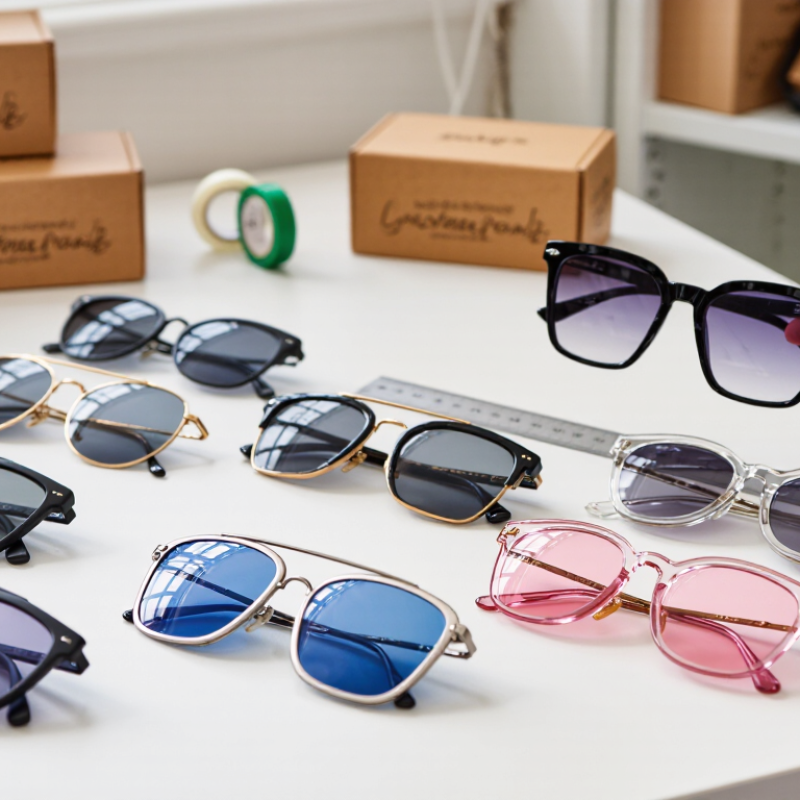
2026 Best Wholesale Sunglasses Suppliers for Global Buyers?

Types of Wholesale Sunglasses Suppliers for Global Buyers

Types of Wholesale Sunglasses Suppliers for Global Buyers

Global buyers usually work with four supplier types: direct manufacturers, private-label factories, export trading companies, and regional distributors.

Direct manufacturers Direct manufacturers often provide better unit prices and production control. They suit buyers ordering thousands of acetate or metal frames.
Private-label factories Private-label factories offer sampling, logo placement, packaging, and color customization. Their strength is flexibility, but minimum order quantities may be less friendly to small retailers.
Export trading companies Export trading companies combine products from several factories. This can simplify mixed orders, inspections, and shipping documents. However, buyers may lose visibility into the actual production site.
Regional distributors Regional distributors provide faster delivery and local inventory. Their prices are usually higher, but they reduce lead times and communication problems. Useful options.
20.3 billion dollars

Grand View Research valued the global sunglasses market at about 20.3 billion dollars in 2023. It projects roughly 6.4% annual growth from 2024 to 2030.

This expansion increases supplier choice, but also raises quality risks. Buyers should request UV400 test reports, lens-material details, hinge specifications, and recent production samples. A sample should survive repeated opening and closing, not merely look attractive under showroom lights.

Factory audits can reveal weak packaging, inconsistent tint, or poor worker training. A low quotation is not always a saving.

I have found that unclear defect policies create more cost than slightly higher unit prices. Supplier selection still needs human judgment, because reports rarely show every practical weakness.

Key Factors for Evaluating Sunglasses Suppliers

When evaluating sunglasses suppliers, price is only one signal. Grand View Research estimated the global sunglasses market at about USD 20 billion in 2023, with continued growth through 2030. This scale attracts capable factories and careless intermediaries. Buyers should verify production experience, export records, and repeat-order evidence before negotiating volume.

Material control matters. Request lens composition, frame material, UV protection results, and impact-test records. A supplier claiming “UV400” should provide recent laboratory reports, not only a product-page statement. Check whether reports match the exact lens batch. ISO 12312-1 offers a useful reference for general-purpose sunglasses. Testing should cover transmittance, optical quality, and mechanical strength. Small inconsistencies become expensive after thousands of units.

Operational reliability needs numbers. Compare sample approval time, minimum order quantity, defect rates, production capacity, and on-time delivery history. Ask for batch photos, carton specifications, and a documented inspection process. The International Trade Centre highlights quality consistency and supply-chain transparency as important factors in international sourcing. The cheapest quotation may exclude testing, packaging, or replacement costs. That is easy to miss. I would score suppliers quarterly, but not blindly. A polished audit can still overlook weak corrective action. Real experience often appears in the supplier’s response to an uncomfortable question, not in a perfect presentation.

Leading Wholesale Sunglasses Supplier Regions in 2026

In 2026, wholesale sunglasses sourcing is becoming more regional and data-driven. China remains a major production hub, especially for injection-molded frames, metal styles, and high-volume private-label orders. UN Comtrade data for HS 9004.10 consistently places China among the world’s largest sunglasses exporters. Its advantages include broad supplier networks, flexible minimum order quantities, and fast material matching.

Italy and other European manufacturing regions remain important for premium craftsmanship and refined acetate work. Turkey has also gained attention for nearby European delivery and smaller production runs. India offers growing capacity in handmade frames, stainless steel components, and cost-conscious manufacturing. Industry reports from Grand View Research estimate that the global sunglasses market reached about USD 20 billion in the early 2020s, with steady growth expected through 2030. However, market size does not guarantee supplier quality. That assumption needs checking.

Tips: Compare three regions before requesting samples. Ask for lens test reports, material declarations, factory audit records, and production photos. Confirm whether quoted prices include packaging and export documentation. A low unit price can hide higher defect rates or slower rework. Also review delivery performance across at least two previous seasons. Supplier claims are useful, but shipment records are stronger evidence. Small sample orders may feel inefficient, yet they often reveal color inconsistency, loose hinges, and packaging damage before a larger commitment.

How to Verify Quality, Compliance, and Production Capacity

When selecting wholesale sunglasses suppliers for 2026, verify performance before negotiating price.

The World Health Organization estimates that ultraviolet radiation causes about 1.5 million disability-adjusted life years annually, mainly through cataracts. Ask suppliers for laboratory reports showing UV400 or 100% UVA and UVB protection. The report should identify the exact lens model, not only the factory.

Check testing against ISO 12312-1 for general-purpose sunglasses. For European sales, request documentation supporting applicable product safety and labeling requirements. Review impact resistance, optical power, tint uniformity, and hinge durability.

A clear lens sample can still fail UV testing.

It happens.

Production capacity needs evidence, not confident emails.

Request monthly output records, equipment lists, staffing details, and recent inspection results. Compare declared capacity with lead times during peak seasons. The 2023 Global Eyewear Market report by Grand View Research estimated continued market growth, increasing pressure on factories during high-demand periods. Capacity claims may therefore change quickly.

Order samples from different production batches. Measure frame dimensions and inspect lens edges under strong light. Require a written process for defective goods, corrective actions, and batch traceability.

Supplier audits are useful, but they are not perfect. I would still perform independent pre-shipment testing, especially after material changes.

Keep signed specifications, test reports, and approved samples together.

Documentation is slow, yet it protects purchasing decisions when quality disputes appear.

Ordering, Pricing, Shipping, and Partnership Considerations

In 2026, global buyers should evaluate wholesale sunglasses suppliers through evidence, not polished catalogs. Request physical samples, lens test reports, material specifications, and production photos. For daily wear, confirm UV400 performance through an independent laboratory report. Check hinge movement, lens alignment, logo-free packaging, and surface scratches under bright light. Also verify destination-country labeling and import requirements. Samples expose defects that spreadsheets hide.

Pricing should show more than unit cost. Ask for MOQ, sample fees, mold charges, packaging, payment stages, and currency terms. Compare quotations on the same basis, such as FOB or DDP, because shipping responsibility changes the final margin. A low quote may exclude cartons, inspection, or customs handling. Calculate landed cost per pair. Leave room for seasonal price changes. My sourcing lesson is uncomfortable: chasing the cheapest offer often creates expensive rework.

Shipping plans need carton dimensions, gross weight, lead time, port details, and export documents. Confirm commercial invoices, packing lists, certificates, and consistent product codes. For partnership, test communication before placing a large order. Send a clear tech pack and request weekly production updates. Agree on defect tolerances, replacement rules, inspection timing, and late-shipment procedures in writing. Keep a small trial order. It may feel inefficient. It reveals response speed, packing quality, and honesty when problems appear. A reliable partner accepts questions and records changes instead of promising everything instantly.

FAQS

Why should buyers look beyond the lowest sunglasses price?

A low quotation may exclude testing, packaging, or replacement costs. Those costs appear later. Compare the complete landed cost, not only the unit price.

What documents should a sunglasses supplier provide?

Request lens composition, frame materials, UV test results, and impact-test records. Ask for recent laboratory reports. The report should match the exact lens batch. A product-page claim is weak evidence.

How can buyers verify a supplier’s production experience?

Review export records, production photos, and repeat-order evidence. Ask about previous seasonal deliveries. Shipment history usually speaks louder than a polished presentation.

Which regions should buyers compare when sourcing sunglasses?

Compare at least three regions before requesting samples. Large production hubs offer flexible quantities and broad material choices. European makers may provide refined craftsmanship. Nearby producers can shorten delivery routes.

What operational details should buyers measure?

Compare sample approval time, minimum order quantity, defect rates, capacity, and delivery performance. Use actual numbers. Promises alone are not enough.

Why are small sample orders useful?

Samples can reveal uneven colors, loose hinges, and damaged packaging. These problems are easier to fix before large production. Small orders feel inefficient, but they may prevent expensive mistakes.

How should buyers evaluate UV protection claims?

Request test results covering UV protection, light transmission, optical quality, and mechanical strength. Check the testing date. Confirm the report covers the delivered lens material, not merely a similar sample.

How often should supplier performance be reviewed?

A quarterly scorecard can track defects, delivery timing, corrective action, and communication. Do not trust the score blindly. An attractive audit may still miss weak problem-solving. I would question my own scoring, too.

Conclusion

Choosing the right wholesale sunglasses supplier in 2026 requires a clear understanding of supplier types, regional strengths, and buyer priorities. Global buyers may work with manufacturers, trading companies, private-label producers, or specialized distributors, depending on order volume, customization needs, and target markets. Key evaluation factors include product quality, material consistency, design flexibility, communication, production capacity, certifications, and the supplier’s ability to meet delivery schedules. Major sourcing regions may offer different advantages in terms of manufacturing expertise, cost efficiency, innovation, and logistics support.

Before placing an order, buyers should verify samples, inspection procedures, compliance documentation, factory capabilities, and production lead times. Pricing should be assessed together with minimum order quantities, packaging, payment terms, shipping methods, import responsibilities, and potential hidden costs. A reliable wholesale sunglasses partner should provide transparent quotations, stable quality, responsive service, and scalable production. Careful comparison, clear contracts, and trial orders can help global buyers reduce risk and build a dependable long-term supply relationship.

Evelyn

Evelyn

Evelyn is a highly skilled marketing professional dedicated to helping customers understand the value, capabilities, and practical applications of our company’s products. With a strong combination of market insight, product knowledge, and clear communication, she transforms complex information into......