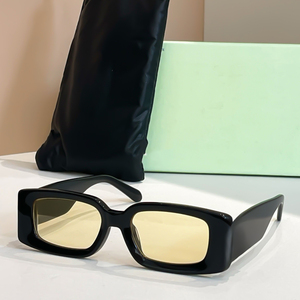
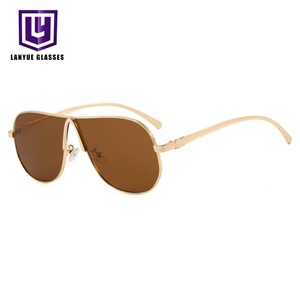
Engineered across monel alloy, medical-grade stainless steel, surgical beta-titanium, and high-tenacity CP injection. Fully customizable with polarized TAC, nylon, and CR-39 optical sun lenses.
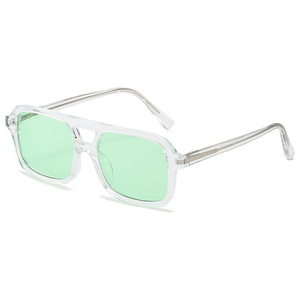
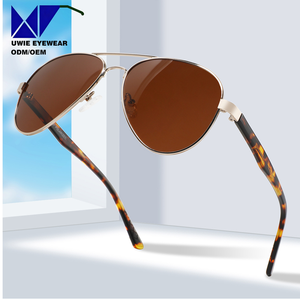
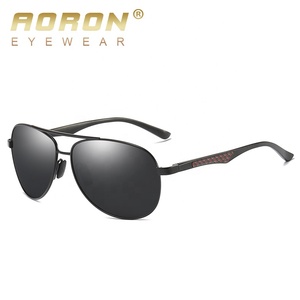
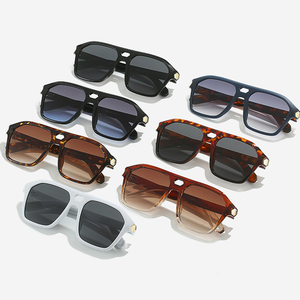
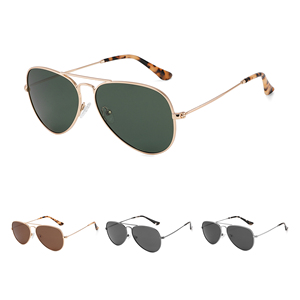
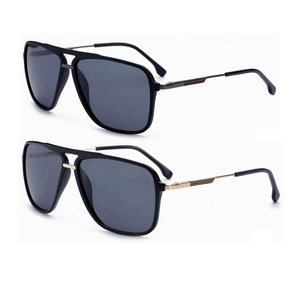
Procuring bulk aviator sunglasses for European, North American, and Australasian retail requires strict conformance to international Personal Protective Equipment (PPE) regulations. Our manufacturing protocols exceed mandatory thresholds.
In international sunglasses sourcing, a genuine CE declaration of conformity represents more than a decorative pad-printed mark on the inner temple. Sunglasses intended for sale within the European Economic Area are legally categorized as Category I Personal Protective Equipment (PPE). Under European Regulation (EU) 2016/425 and the updated technical standard EN ISO 12312-1:2022, every batch leaving our factory floor undergoes rigorous spectroscopic, mechanical, and bio-chemical verifications before custom clearance documentation is issued.
A frequent pitfall for optical retail chains and private labels is working with factories that utilize non-stabilized triacetate cellulose (TAC) or unstable polycarbonate resins that fail the spectral transmittance tolerances. Our automated lens testing rigs evaluate ultraviolet transmittance between 280 nm and 400 nm, guaranteeing zero UV radiation leakage (UV400 certification). Lenses undergo spectrophotometer analysis ensuring precise category categorization from Category 0 (clear/fashion tints) through Category 3 (strong sunlight, 8%–18% visible luminous transmittance), complete with zero prismatic distortion across the 180° visual field.
| Compliance Parameter | Standard Reference | Testing Protocol / Factory Benchmark | Relevance for Global Importers |
|---|---|---|---|
| Luminous Transmittance | EN ISO 12312-1:2022 Clause 5.2 | Category 3 (11.5% ± 1.5% transmission), zero chromatic shift | Legally compliant for high-glare driving and outdoor retail |
| UV Transmittance (UVA/UVB) | ISO 12311:2013 / ANSI Z80.3 | < 0.5% UVA (315-400 nm), < 0.1% UVB (280-315 nm) | True UV400 rating prevents premature ocular degradation |
| Mechanical Impact Resistance | FDA 21 CFR 801.410 / Drop Ball | 5/8-inch steel ball dropped from 50 inches without fracture | Mandatory customs entry qualification for US & EU ports |
| Nickel Release (Metal Frames) | EN 16128:2015 (REACH Annex XVII) | Release rate < 0.5 µg/cm²/week after simulated wear | Guarantees hypoallergenic safety and zero skin irritation |
| Polarization Efficiency | ISO 12312-1 Clause 5.3.5.2 | Polarizing efficiency index ≥ 99.2% via polarized spectrophotometer | Eliminates blinding reflective glare on wet asphalt and marine water |
How consumer preferences, material science, and global trade dynamics are transforming high-volume aviator sunglasses purchasing for 2025–2030.
ESG compliance has transitioned from marketing buzzwords to mandatory retail procurement criteria. High-tier private labels increasingly demand bio-acetate (cotton linters with non-phthalate plasticizers) and recycled stainless alloys that reduce lifecycle carbon footprints while maintaining tensile durability.
While the teardrop pilot design established by 1930s aviation remains a cornerstone, modern retail buyers are pivoting toward architectural double bridges, flat-top navigation bars, and geometric square-pilot hybrids that accommodate broader multinational facial anatomies.
Traditional manufacturing forced brands into 5,000-piece single-color commitments. The future of OEM belongs to agile CNC toolings, modular temple fixtures, and rapid laser etching that allow optical distributors to test 300 to 600 pieces across diverse tint editions.
Buyers are stepping away from budget 0.74mm TAC towards 1.1mm-1.8mm cast polyamide (nylon) and CR-39 polarized units. Nylon delivers Abbe values above 52, drastically reducing chromatic aberration and offering unmatched impact safety without frame bowing.
Physical Vapor Deposition (PVD) ion titanium plating has superseded conventional electroplating. It resists 72-hour salt-fog sweat tests without flaking, tarnishing, or releasing toxic nickel onto the wearer's skin over years of coastal or active usage.
Leveraging the trading hub velocity of Salecha Lifestyle LLP alongside dedicated precision manufacturing facilities, we bridge the gap between factory-floor engineering and global optical retail distribution.
Every aviator frame undergoes a 20,000-cycle mechanical spring-hinge flexing cycle, optical bench barrel-alignment checks, and rigorous lens-groove bevel tension verifications to prevent pop-outs under thermal expansion.
We supply diverse retail strata under proprietary brand lines including Eagle & Kyte (high-end metal/acetate aviators), Reyan (ergonomic everyday prescription pilots), and Tryst (fashion-forward statement collections).
From complete technical files (DoC) for the European Union to FDA device listing paperwork and drop-ball impact test certificates for US CBP entry, we eliminate customs friction for our international procurement partners.
Unlike disposable mass-market shades, our aviator eyewires feature standardized eye sizes (55mm to 62mm), true 4-base and 6-base curvatures, and screw-locking eye rims engineered for optical lab glazing with single-vision or progressive lenses.
We support mixed-assortment container packing, allowing retail franchisees and optical clinics to combine metal aviators, CP retro pilots, and prescription frames into consolidated shipments to optimize landed freight costs.
Work directly with optical frame technicians and seasoned sales managers operating from Dharam Palace, Mumbai. Get prompt, articulate guidance on dimensional fits, bridge spans, and regional market sell-through patterns.
Clear, direct operational answers to help supply chain directors, optical buyers, and brand managers navigate bulk pilot eyewear procurement.