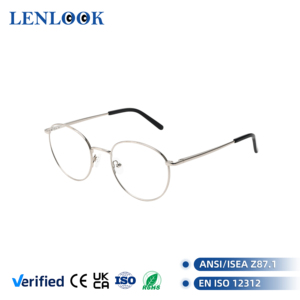
Direct factory production lines covering high-density cellulose acetate, flexible TR90 memory polymers, hypoallergenic stainless alloys, and custom multi-axis CNC molds.
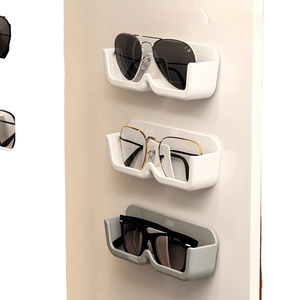
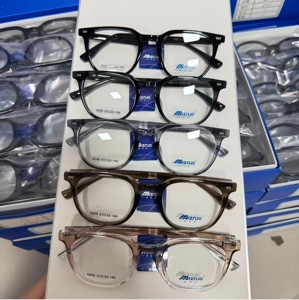
Why professional prescription eyewear requires vastly superior mechanical tolerances compared to standard injection fashion frames.
Prescription eyewear (Rx optical spectacle frames) represents an essential convergence of medical optics, metallurgical durability, and ergonomic geometry. When sourcing from China's premier industrial optical manufacturing clusters—such as Shenzhen (high-end acetate and titanium), Wenzhou (rapid injection metal and TR90), and Danyang (ophthalmic lens and frame integration)—global optical buyers must evaluate technical competencies beyond surface aesthetics.
Utilizing high-precision 0.005mm CNC wire cutting and EDM machining, our optical eye wires ensure strict standard groove angles (110° to 120° V-bevel) and uniform rim depth (0.55mm ± 0.02mm). This eliminates lens popping and radial stress birefringence during high-index glazing.
Propionate (CP) and multi-laminate cellulose acetate temples incorporate internal stainless nickel-silver wire cores with custom coining. This architecture permits optical laboratories and dispensing optometrists to perform cold and warm temple bending without structural core slippage or delamination.
Prescription accuracy requires exact visual axis alignment. Our frames undergo standardized chassis bench-alignment ensuring 8° to 12° pantoscopic tilt, 0° to 5° wrap angle, and balanced vertex distance (12mm-14mm), crucial for digital freeform progressives and astigmatic toric lenses.
Selecting appropriate frame substrates based on diopter load, thermal stability, weight, and retail adjustment characteristics.
| Material Category | Specific Gravity | Tensile Strength | Prescription Glazing Adaptability | Laboratory Adjustability | Standard Compliance |
|---|---|---|---|---|---|
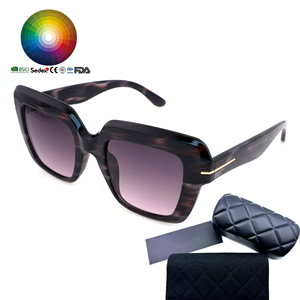
| Cellulose Acetate (Block Cut) | 1.28 - 1.32 g/cm³ | 45 - 60 MPa | High Diopters (±10.00D) | Warm frame warmer (65°C - 75°C) | ISO 12870, REACH, RoHS |
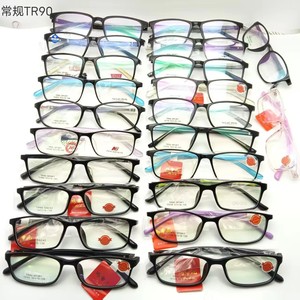
| Swiss EMS TR90 (Polyamide) | 1.02 - 1.06 g/cm³ | 85 - 105 MPa | Moderate Diopters (±6.00D) | Cold snap-fit / Low thermal memory | FDA Class I, CE Medical |
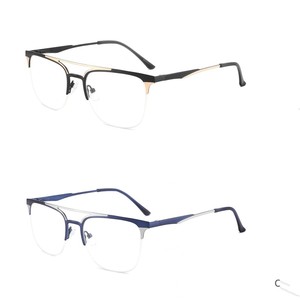
| Japanese Beta-Titanium / Stainless | 4.50 / 7.90 g/cm³ | 880 - 1100 MPa | Grooved Rimless / Metal Wire | Pliers adjustment (Nose pads, Endpiece) | EN 16128 (Nickel Safe) |
| CP (Cellulose Propionate) Injected | 1.18 - 1.22 g/cm³ | 50 - 70 MPa | Standard Glaze (±4.00D) | Gentle heating / Embedded core | ISO 12870 Dimensional Hold |
Critical shifts in global ophthalmic supply chains, consumer behavior, and smart frame integration.
Global optical retail conglomerates are enforcing strict carbon accounting. China's leading exporters are migrating toward bio-based plasticizers (diethyl phthalate replaced with bio-triethyl citrate), achieving over 68% renewable carbon content and ISCC Plus certification while retaining high-gloss mechanical polishability.
As 1.67 and 1.74 ultra-high index and MR-8 resin lenses dominate the global dispensing sphere, modern frames require narrower front profiles (under 3.8mm rim thickness) combined with deeper inner retaining bevels to effectively conceal edge thickness in severe myopic prescriptions.
The boundary between traditional medical eyewear and wearable electronics is fading. Modern prescription front chassis are increasingly engineered with modular temple-docking hinges, enabling OEM buyers to attach interchangeable smart audio/sensor temples without distorting optical centerlines.
From digital 3D parametric blueprinting to 96-hour mechanical salt spray and torque resistance.
Digital prototyping calibrated to Box System (A-B-ED-DBL dimensions) ensures exact bridge width, lens diameter, and temple ergonomics across Asian, European, and Universal fit nose geometries.
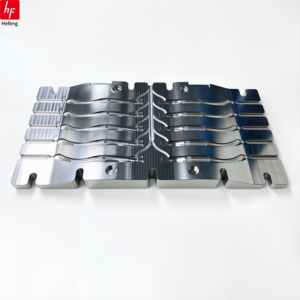
Five-axis automated toolheads sculpt the frame front from cured acetate slabs or inject pure TR90 polymer into mirror-finish steel cavity molds, holding tolerances within ±0.05mm.
Acetate components undergo 72 hours of multi-phase barrel tumbling with birchwood chips, pumice stone, and specialized polishing creams to achieve a mirror finish without round-edge degradation.
Final frames are glazed with dummy CR-39 / PC pattern lenses, undergo 25,000-cycle spring-hinge endurance tests, and cross-cut tape adhesion testing for PVD and IP electroplating coatings.
Complete vertical integration bridging precision tooling, rapid sample turnaround, and zero-defect QA systems.
Equipped with 5-axis CNC machining centers achieving 0.005mm metal processing accuracy. We fabricate custom eyewear injection molds, stamping dies, and temple-core extrusion tools entirely in-house, cutting new SKU development lead times from 60 days to 18 days.
Unlike conventional water electroplating, our facility utilizes cleanroom Physical Vapor Deposition (PVD) and Ion Plating (IP). This delivers ultra-hard, corrosion-resistant metallic finishes that pass 96-hour synthetic sweat immersion and EN 16128 zero-nickel migration thresholds.
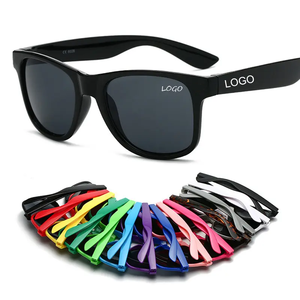
From high-volume promotional PC sunglass editions to luxury acetate prescription collections, we offer complete OEM branding: precision laser logo engraving, hot-foil inner temple coining, pad printing, and custom eco-friendly PP or leatherette storage case manufacturing.
Detailed answers addressing engineering tolerances, regulatory certifications, international logistics, and private labeling.