
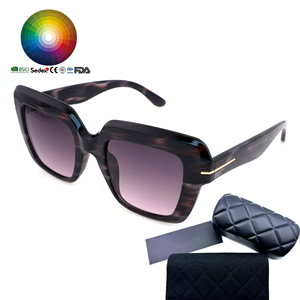
Engineered for high-throughput industrial environments, tactical response, laboratory hazards, and dual-purpose corporate vision programs. Every model supports customized private labeling, specialized coatings, and ergonomic temple adjustment.
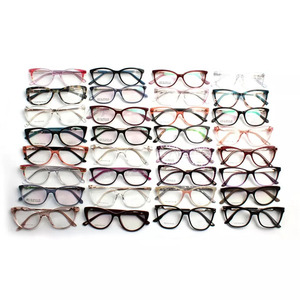

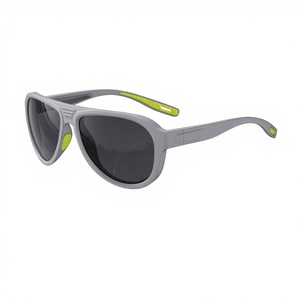

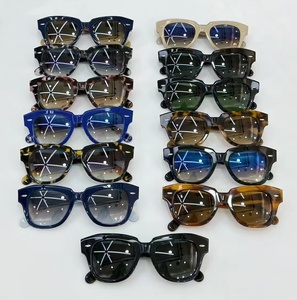
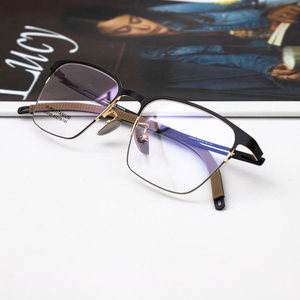
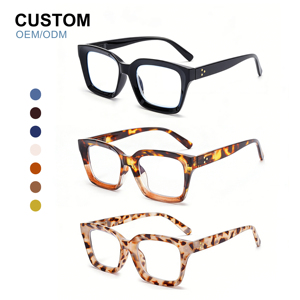
A procurement guide for PPE importers, retail chains, and safety distributors evaluating China-based manufacturing infrastructure against Western regulatory barriers.
Navigating global regulatory landscapes requires understanding the divergent ballistic metrics between US and European testing authorities. ANSI Z87.1-2020 specifies high-velocity projectile testing via a 1/4-inch steel ball propelled at 150 feet per second (high-impact rating marked as 'Z87+'), combined with high-mass drop-dart evaluations.
Conversely, European EN 166:2001 necessitates explicit optical clarity grade categorization (Class 1, 2, or 3), combined with mechanical strength markers: Grade S (increased robustness), Grade F (low energy impact at 45 m/s), and Grade B (medium energy impact at 120 m/s for full goggles). As a primary China manufacturer, our toolings embed required injection-molded permanent frame stampings alongside complete technical dossier documentation.
The structural efficacy of industrial safety spectacles hinges entirely on raw resin homogeneity. Standard optical grade polycarbonates (such as Covestro Makrolon or Sabic Lexan) offer high internal impact absorption, making them the industry baseline for monolithic lenses and wraparound shields.
For modular and prescription safety frames, TR90 (Swiss Grilamid PA12 polyamide) delivers a resilient balance of high flexural fatigue strength, chemical resistance against oils and solvents, and dimensional memory under thermal fluctuations (-30°C to +80°C). Where cosmetic appeal and custom branding converge, high-density cellulose acetate with embedded stainless steel wire cores delivers adjustability without structural failure.
Uncoated resin lenses degrade rapidly under airborne abrasives. Our cleanroom facilities employ automated plasma-enhanced chemical vapor deposition (PECVD) and ultrasonic dip-coating lines to apply optical enhancements with nanoscale precision.
Permanently bonded anti-fog hydrophilic formulations mitigate lens condensation in sudden microclimate transitions by lowering the contact angle of water droplets to near zero degrees. Simultaneously, polysiloxane hard-coats (reaching 4H to 6H pencil hardness ratings) prevent scratching from steel grit and fine particulate contact, prolonging usable service life across logistics, mining, and industrial sectors.
Verify critical specifications across high-impact polycarbonate, flexible TR90 frames, premium cellulose acetate, and aircraft titanium.
| Substrate / Metric | Standard Compliance | Impact Fracture Threshold | Chemical / Solvent Resistance | Optical Clarity Rating | Glazing / Rx Compatibility |
|---|---|---|---|---|---|
| Optical Polycarbonate (PC) | ANSI Z87.1+ / EN 166 F | High Velocity (150 ft/s steel sphere) | Moderate (Avoid high ketones) | Abbe Value 30 (Grade 1 Optical) | Plano Primary / Direct Surface Insert |
| High-Flex TR90 Polyamide | ANSI Z87.1-2020 (Frame Only) | Extreme Flexural Endurance (Elongation >150%) | High (Resists sweat, oils, fuels) | N/A (Structural Frame) | Full Rx Optical Inserts & Bevels |
| High-Density Acetate (CA) | ISO 12870 / EN 166 Basic | Moderate Drop-Ball Toughness | Stable Against Cosmetics & Alcohols | N/A (Frame Construction) | Direct Progressive / Bifocal Glazing |
| Pure Titanium Alloy | ISO 12870 Corrosion Proof | Tensile Yield >450 MPa | Extreme (Unaffected by acids/salt) | N/A (Surgical Grade Metal) | Full Rim Rimless Lab Mounting |
Key market vectors shaping global supply agreements, consumer-safety convergence, and automated manufacturing workflows.
The traditional dichotomy between industrial PPE and retail fashion is collapsing. Modern safety managers face persistent compliance drop-offs when fielding bulky, unergonomic eye protection. Forward-looking distributors are prioritizing contemporary silhouettes—such as geometric acetate shapes, modern aviators, and flat-top wayfarers—that house integrated side shields and meet Z87+ ratings.
By blending everyday wearable styling with industrial-grade polycarbonate, workforces willingly wear eye protection throughout full shifts, reducing corporate liability while enabling workers to transition smoothly between shop floor and urban spaces.
Corporate ESG directives are reshaping industrial PPE tender specifications across North America and Europe. Procurement teams are moving away from fossil-fuel virgin plastics toward verified carbon-neutral alternatives, including bio-based castor oil polyamides (bio-TR90) and recyclable monomaterial construction.
Monomaterial safety spectacles—where lenses, frames, and flexible hinges share identical resin profiles—eliminate disassembly overhead during post-consumer recycling. Implementing closed-loop take-back initiatives backed by ISO 14040 Life Cycle Assessments is rapidly shifting from an optional marketing differentiator to a mandatory tender prerequisite.
Next-generation safety glasses are expanding into active digital interfaces. Automated production facilities are testing TR90 and pure titanium frames with micro-molded temple cavities designed to accept heads-up display modules, ambient light photodiodes, and automated tint-shifting electrochromic layers.
Rather than relying on secondary clip-on equipment, next-decade safety eyewear integrates contextual picking data, thermal warnings, and blue-light filtration directly into ANSI-certified lens geometry, fundamentally advancing preventative safety in hazardous supply chain environments.
Combining the design legacy and curated supply authority of our trade distribution hubs with high-capacity injection molding, CNC acetate milling, and certified laboratory validation.
Every production lot undergoes 100% mechanical and optical testing. We evaluate barrel hinge fatigue over 20,000 continuous open-close cycles, verify optical prism deviation under EN 167 parameters, and confirm surface hydrophobicity before protective poly-bagging and carton packing.
We eliminate standard tooling lead times. Access our active library of over 400 injection molds and CNC programs spanning Aviator, Wayfarer, Round, Square, and Full-Wrap architectures across our Eagle & Kyte, Reyan, and Tryst series, enabling rapid market entry.
Engineered with lens-friendly base curves (4, 6, and 8-base geometries) and standardized eye-wire groove depths. Optical laboratories can glaze our protective frames with single-vision, progressive, bifocal, and custom anti-reflective blue-blocking lenses without chipping risks.
Direct answers for global safety eyewear buyers, optical distributors, supply chain coordinators, and corporate procurement managers.
For in-stock catalog configurations spanning our standard colorways and toolings, minimums start as low as 100 to 300 units for batch testing. Fully customized OEM contracts featuring bespoke pantone colors, laser-etched lens markings, and custom packaging require 1,200 units per mold configuration, split across multiple temple accents.
We provide full technical documentation dossiers alongside CE Type Examination Certificates, Declaration of Conformity (DoC), and accredited third-party test reports (from SGS, TUV, and Intertek) verifying ANSI Z87.1-2020, EN 166:2001, and AS/NZS 1337.1 parameters on demand.
Yes. Our entire industrial optical collection is engineered specifically for prescription glazing. The eyewire dimensions, chassis groove angles, and temple balances accommodate standard optical lab surfacing machinery, including polycarbonate, Trivex, high-index 1.67, and progressive lens geometries.
Yes. Wholesale buyers can assemble consolidated container loads across multiple brands—including Eagle & Kyte, Reyan, and Tryst—combining metal aviators, rectangular acetate frames, and TR90 sporty wraps to build balanced inventory mixes within a single trade relationship.
We apply specialized coatings to match workplace hazards. Options include permanent hydrophilic anti-fog coatings for humid cold-storage, military-grade anti-scratch polysiloxane hard-coats, mirror hydrophobic finishes for outdoor infrastructure, and targeted HEV420 blue-light filtration for digital inspection.
Qualified B2B procurement partners can request physical evaluation kits shipped via air express within 48 to 72 hours. For production orders, we facilitate live video factory audits, pre-dispatch ANSI drop-ball testing footage, and third-party inspection sign-offs prior to export clearance.