Curated commercial silhouettes combining aerospace-grade Swiss TR90 memory polymers, beta-titanium core chassis, and hand-polished bio-acetates specifically optimized for East Asian nasal bridges and progressive lens fitting.
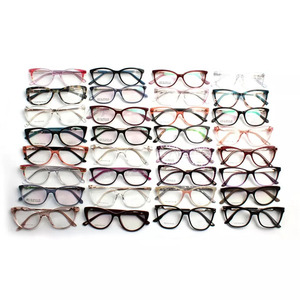

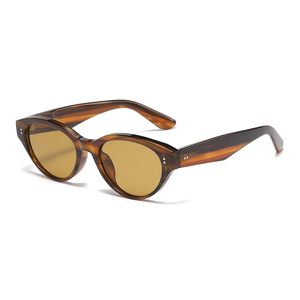
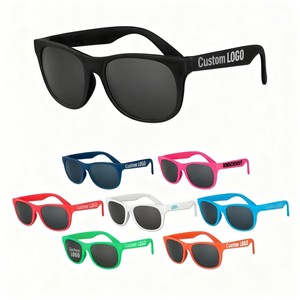
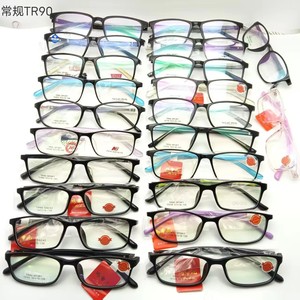
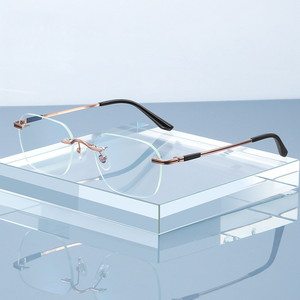

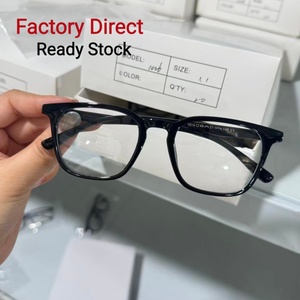
B2B optical buyers navigating the rigorous Japanese medical device procurement environment require full metallurgical and dimensional validation across European EN ISO 12870 frameworks and Japan's MHLW standards.
Every optical chassis shipped under our commercial framework complies concurrently with EU Regulation (MDR) 2017/745 for Class I medical devices and the mechanical endurance requirements mandated under JIS B 7285:2020. This ensures seamless customs clearance via Tokyo and Osaka ports and instant alignment with Japanese Pharmaceutical and Medical Devices Law (PMD Act) vendor filing guidelines.
Our metal frameworks undergo rigorous third-party immersion testing under EN 16128, restricting nickel release strictly to below 0.5 μg/cm²/week to protect sensitive end-users against contact dermatitis. Acetate profiles are formulated using bio-based plasticizers, entirely excluding hazardous phthalate plasticizers (DEHP, DBP, BBP) according to REACH Annex XVII and Japanese Consumer Product Safety Acts.
Japanese automated high-speed edging systems (e.g., NIDEK, Takubomatic) require microscopic groove precision. We maintain an eye-wire bevel tolerance of ±0.05mm across both hot-insertion acetate rims and flexible nylon cold-mount grooves, eliminating lens push-out failures when mounting high-minus (up to -10.00D) ultra-high-index (1.74) Japanese mineral and organic lenses.
A frequent failure mode of European frame imports in Japan is slippage and uncomfortable cheek contact. Our manufacturing matrices adjust bridge depth, pantoscopic angle, and temple flare based on empirical Japanese anthropometric data.
Standard European frames feature narrow, deep bridge geometries (18-21mm DBL) that cause lower-rim cheek resting in Japan. Our frames integrate 14-16mm narrowed, built-up saddle bridges that distribute weight evenly across flatter, broader nasal roots.
Goose-neck pad arms engineered with extra three-dimensional adjustability clearance. Fitted with medical-grade, non-slip Japanese hollow silicone or micro-grooved titanium pads to completely prevent nasal bridge indentation.
Standard 12°–15° forward frame tilt causes front rims to graze the high zygomatic arches (cheekbones) of East Asian wearers. Our tooling flattens the pantoscopic tilt to an optimal 8°–10°, maximizing optical clarity and comfort.
East Asian cranial structure exhibits a wider biparietal diameter (wider skull temple-to-temple). Temples are designed with pre-curved inward wrapping architecture and progressive tension release to prevent temporal pressure headaches.
A side-by-side technical evaluation for optical merchandise directors balancing unit cost, tensile strength, weight metrics, and retail margin performance in the Japanese retail landscape.
| Material Class | Specific Gravity | Tensile Strength | Prescription Glazing Range | Thermal Stability | Primary Japanese Market Segment |
|---|---|---|---|---|---|
| Japanese Pure Beta-Titanium | 4.51 g/cm³ | 880–950 MPa | All index depths (+6.00D to -12.00D) | Up to 220°C | Department Store & Boutiques (Ginza/Omotesando) |
| Swiss EMS Grilamid TR90 | 1.02 g/cm³ | 65–85 MPa | Single-vision & low PAL (-6.00D limit) | Glass transition 155°C | Fast-Fashion Retail Chains (JINS/Zoff model) |
| Mazzucchelli-Type Cellulose Bio-Acetate | 1.28 g/cm³ | 90–120 MPa | Heavy minus (-10.00D) & deep progressives | Heat moldable at 60°C–80°C | Prescription Eyewear Chains (Paris Miki tier) |
| SUS304 Stainless Steel / Monel Hybrid | 7.90 g/cm³ | 520–720 MPa | Half-rim & classic rimless mounts | Up to 300°C | Corporate Silver Eyewear & Suburban Clinics |
| High-Molecular Optical PC (Sun Series) | 1.20 g/cm³ | 70–95 MPa | UV400 fashion tints / zero Rx plano | Stable -20°C to +80°C | Lifestyle Megastores & Seasonal Volume Outlets |
Aligning manufacturing output with structural consumption shifts in the world's third-largest optical retail economy.
Over 29% of Japan's population is aged 65 or older. This demographic reality creates non-cyclical, high-margin demand for deep B-measurement frames (≥34mm) that accommodate progressive addition lenses (PAL) without cutting off reading zones. Our prescription optical series integrates deeper vertical eye profiles without aesthetic bulk.
With Japan's dense white-collar salaryman workforce spending extended hours on multi-screen displays, our TR90 and metal frames are paired with factory-glazed blue-cut lenses tested under JIS T 7333 specifications. These offer 40% blue-ray reduction in the 380–500nm band with less than 2% base lens yellowing.
Japanese consumer product evaluation heavily penalizes heavy optical gear. Modern Japanese buyers scrutinize frame mass directly in-store. Through precision hollow injection molding and laser-cut beta-titanium wireworks, we produce complete prescription chassis weighing between 4.2g and 8.9g without sacrificing structural hinge rigidity.
Combining the massive capacity and logistical nexus of our Mumbai commercial trading headquarters (Dharam Palace, Grant Road) with high-precision ISO-audited cleanroom manufacturing lines.
Immediate wholesale and OEM access to fully realized optical designs spanning our signature house brands: Eagle & Kyte (urban structural acetate and titanium), Reyan (high-volume, lens-ready everyday workhorse frames), and Tryst (trend-forward cat-eye and geometric fashion frames).
Every batch of frames bound for Japan passes through a 100% manual and automated bench inspection: optical axis symmetry verification, 96-hour neutral salt spray corrosion resistance (ASTM B117), 500-cycle bridge fatigue testing, and 1.2 N·m hinge screw torque tension retention checks.
Eliminate inventory deadweight. Unlike rigid suppliers mandating 1,000 units per single color SKU, our supply architecture accommodates balanced mixed-SKU assortments across materials, sizes, and colors in single bulk consolidations, lowering capital requirements for Japanese retailers.
Strategically situated in Mumbai’s historic Grant Road optical hub with direct multimodal connections to Tokyo (Narita/Haneda) and Osaka (Kansai) cargo hubs. Standard air-freight lead times consistently land cleared consignments in Japan within 5 to 8 business days.
Clear, direct answers regarding regulatory cross-mapping, minimum order volumes, laboratory test documentation, and private labeling support.
