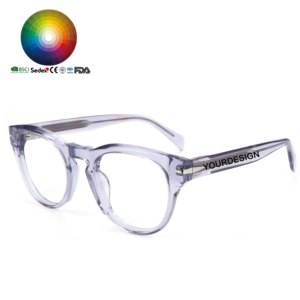
Curated commercial eyewear manufactured to strict optical tolerances, featuring premium acetate, ultra-flexible TR90, laser-grade safety polymers, and precision metal alloys.
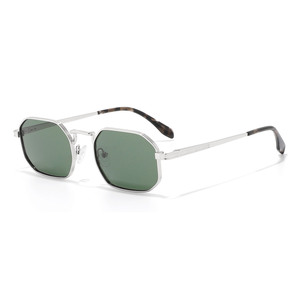
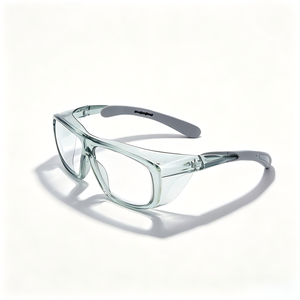
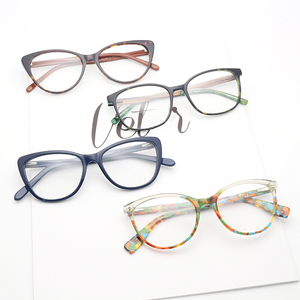
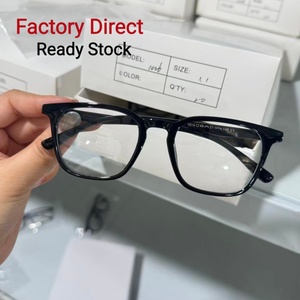

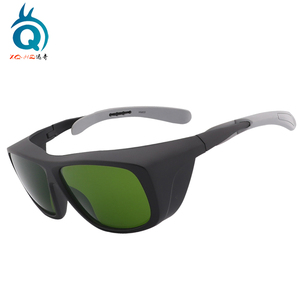
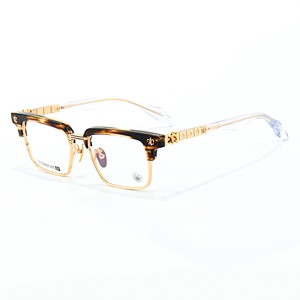
The commercial eyewear and optical frame distribution ecosystem in the United States represents a market valuation exceeding $34.5 billion. Within this dynamic space, independent optometry practices, regional optical retail chains, safety supply distributors, and e-commerce brands navigate complex trade requirements, shifting tariff codes under Harmonized Tariff Schedule (HTS) Headings 9003 and 9004, and stringent consumer protection standards administered by the U.S. Food and Drug Administration (FDA) and the Occupational Safety and Health Administration (OSHA).
Procuring commercial eyewear wholesale requires more than sourcing aesthetic designs; it requires an institutional understanding of optical metallurgy, polymer viscoelasticity, lens glazing ergonomics, and reliable door-to-door bonded logistics. For American retail optical buyers, every frame on the shelf represents a balance between landed gross margins and clinical dispensing reliability. Poorly constructed bridge soldering or unstable cellulose acetate formulations lead directly to lens popping, hinge screw loosening, customer warranty returns, and degraded clinical trust.
"Commercial eyewear distribution is an exact science where micro-millimeter bevel precision, raw material purity, and documented FDA Impact Resistance (21 CFR 801.410) dictate retail profitability and brand longevity."
High-performance commercial frames are evaluated across four primary engineering criteria:
Understanding frame structural chemistry allows commercial procurement managers to optimize their shelf space, reduce dead-stock inventory, and tailor product mixes to specific regional demographics across North America.
| Frame Material Substrate | Density & Weight Profile | Flexural Modulus (Rigidity) | Thermal Adjustability | Primary Commercial Application |
|---|---|---|---|---|
| Block Cellulose Acetate | 1.28 – 1.32 g/cm³ (Substantial) | Medium-High (2.4 GPa) | Excellent (Warm air frame warmer) | Fashion-forward luxury boutiques, designer Sunwear, retro Rx |
| Grilamid TR90 Polymer | 1.01 – 1.04 g/cm³ (Ultra-Light) | High Memory / Flexible (1.6 GPa) | Cold setting (Mechanical fit) | Pediatric eyewear, sports wraps, active lifestyle, budget medical |
| Monel & Stainless Steel Alloy | 7.85 – 8.80 g/cm³ (Slim Profile) | Very High (200 GPa) | Plier adjustment / Nose pads | Classic executive aviators, semi-rimless, minimalist professional |
| Optical Grade Polycarbonate (PC) | 1.20 – 1.22 g/cm³ (High Impact) | High Impact Tensile (2.3 GPa) | Rigid / Non-adjustable | ANSI Z87.1 certified safety goggles, IPL laser PPE, lab protection |
From sun-drenched sunwear hubs to clinical metropolitan practices and high-compliance manufacturing centers, our wholesale eyewear catalog serves specific, lucrative market niches.
Independent optometrists and dispensing opticians throughout New York, California, Texas, and Illinois require differentiated product lines that resist direct online price scraping. Hand-finished acetate frames and sophisticated custom metal aviators deliver 3.5x to 5.0x retail markup potential while ensuring seamless automated lens edging.
Supplying Tier-1 automotive plants in the Midwest, medical laser dermatology clinics, and semiconductor fabrication cleanrooms. Our polycarbonate industrial goggles and IPL laser shield glasses meet rigorous ANSI Z87.1-2020 high-velocity impact resistance and multi-wavelength optical density (OD 4+ to 7+) standards.
Mid-tier optical chain operators and growing direct-to-consumer (D2C) eyewear brands demand rapid SKU restocking, scalable custom laser logo engraving, and low return rates. Our ready-stock TR90 and blue-light collections provide dependable inventory flow, protecting cash velocity through reliable order fulfillment cycles.
Navigating commercial eyewear procurement requires staying ahead of retail consumer trends, macroeconomic trade policies, and clinical optical innovations. The following structural shifts dictate wholesale purchasing decisions for major US distributors:
The post-pandemic workforce continues to operate under hybrid schedule dynamics, spending an average of 8.2 hours daily facing digital screens. Consumer awareness of High Energy Visible (HEV) blue light (wavelengths 415nm–455nm) has expanded demand for non-prescription and over-the-counter reading eyewear equipped with integrated monomer filtering rather than simple surface coatings. Retailers stocking blue-light frames report 38% faster shelf turnarounds compared to legacy un-coated readers.
Corporate sustainability mandates across North American retailers are prompting procurement officers to favor cellulose acetate synthesized using plant-based phthalate-free plasticizers. Our production capabilities integrate biodegradable polymer chains that preserve optical clarity, color marbling, and thermal adjustability while addressing the strict ESG requirements of progressive commercial retailers.
Customs and Border Protection (CBP) inspections along the West Coast and Southern ports have intensified focus on medical device classifications. Optical frames imported into the United States must strictly adhere to:
Combining deep optical engineering heritage, multi-brand catalog agility, and robust logistics infrastructure built for international scale.
Every commercial production run undergoes bridge torque resistance, 25,000 hinge cycle stress checks, spectrophotometer UV400 verification, and microscopic finish analysis before export dispatch.
Leverage our established brand collections—Eagle & Kyte (contemporary lifestyle), Reyan (reliable daily prescription), and Tryst (fashion-forward silhouettes)—or develop proprietary custom private labels.
Eliminate speculative middlemen markups. Our integrated supply chain delivers transparent container-load and pallet-tier volume pricing, ensuring your optical business maintains 60%+ gross margins.
We supply complete import clearance dossiers: FDA Device Establishment Registration, drop-ball impact batch certifications, SDS chemical safety compliance, and commercial HTS tariff classification support.
Clear, authoritative answers addressing import tariffs, FDA compliance, customization tolerances, and bulk ordering mechanics.
All optical frames, reading spectacles, and non-prescription protective eyewear exported to the United States comply fully with FDA Class I medical device specifications under 21 CFR 886.5844. We provide valid Device Establishment Registration numbers, Device Listing documentation, and verified Drop Ball Impact Test batch certificates in accordance with 21 CFR 801.410 with every commercial bill of lading.
For ready-stock models within our Eagle & Kyte, Reyan, and Tryst catalogs, the MOQ starts at just 50 to 100 units per style with rapid dispatch. For custom OEM/ODM private-label manufacturing—including proprietary acetate color laminations, temple core stamping, and custom hard cases—our standard production MOQ is 300 to 500 units per colorway.
Yes. Our frames are specifically engineered for clinical optical dispensing. Frame eyewires feature precise 110-degree bevel grooves that accommodate standard single-vision, flat-top bifocals, and high-addition progressive lenses. Whether your finishing lab glazes standard CR-39, polycarbonate, 1.67 high-index, or Trivex, our frames maintain dimensional stability without warping or cracking.
We offer both FOB international departure port terms and complete Door-to-Door DDP (Delivered Duty Paid) shipping to all 50 U.S. states. Our logistics department coordinates directly with bonded freight forwarders and customs brokers to handle customs declarations under HTS codes 9003.11 (plastic frames), 9003.19 (metal frames), and 9004.10 (sunglasses), mitigating port delays.
Every commercial production batch undergoes rigorous quality assurance: temple alignment symmetry, bridge deformation testing under continuous load, 48-hour salt spray corrosion resistance for metal components, UV400 spectral cutoff confirmation, and automated optical distortion tests. Defective units are discarded prior to packaging, ensuring a defect return rate well below 0.08%.
Yes, we assemble curated commercial sample kits for registered optical store owners, retail chains, and commercial purchasing managers. Sample kits enable your team to evaluate bridge comfort, hinge smoothness, material density, and hand-polished finishing in person before executing full production orders. Dispatch occurs via expedited courier within 48 to 72 hours.