Engineered to satisfy the stringent tolerances required by German optometrists (Augenoptikermeister) and industrial safety officers. Our product portfolio spans high-grade Italian-origin cellulose acetate, Japanese pure titanium, laser-attenuation PPE, and precision medical-grade endoscope lenses.

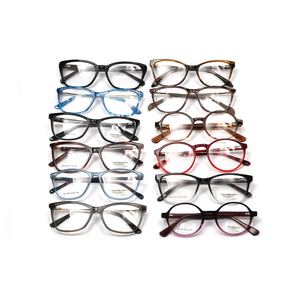
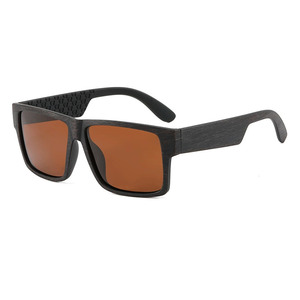
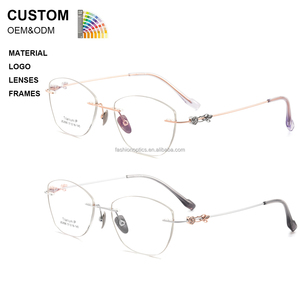
The German optical sector is defined by rigorous technical standards, where end consumers rely heavily on independent opticians (Traditionelle Augenoptiker), established regional buying groups (Opticland, Brillen-Profi, IGA OPTIC), and occupational safety regulations. Understanding this ecosystem ensures every shipment delivers quantifiable commercial margins and zero compliance headaches.
Over 65% of German prescription wearers utilize multifocal lenses due to demographic trends. Our acetate and titanium chassis feature calibrated pantoscopic tilts (7° to 9°), generous B-box measurements (minimum 36mm vertical height), and standardized bevel grooves engineered to house 1.67 and 1.74 high-index organic lenses without bridge torsion or rim blow-out during cold-glazing.
German employers must provide VDU-compliant eyewear (Bildschirmarbeitsplatzbrillen) for office personnel. We manufacture ergonomically balanced frames utilizing medical TR90 and pure beta-titanium that distribute temple pressure below 1.2N. Paired with certified blue-attenuation optics, our OEM configurations integrate seamlessly into corporate B2B supply agreements across North Rhine-Westphalia, Bavaria, and Baden-Württemberg.
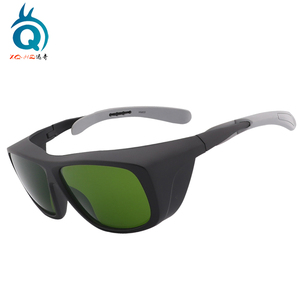
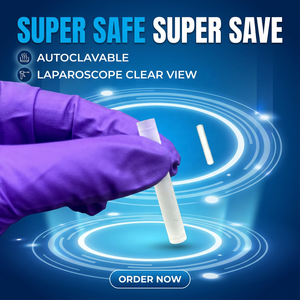
Beyond ophthalmic frames, our manufacturing floor supports technical optical components for dermatological clinics and laser fabrication workshops in Germany. We produce customized polycarbonate laser protective eyewear calibrated to DIN EN 207 standards alongside micro-machined medical endoscope lens barrels subjected to 134°C autoclave cycle validations.
Strategic purchasing in Germany has moved past simple unit-cost metrics. Sustainability audits, supply chain traceability, hypoallergenic chemistry, and agility in private labeling are dictating vendor selections across major German metropolitan markets.
German consumers insist on sustainable cellulose acetate derived from wood pulp and cotton lint, utilizing non-phthalate bio-plasticizers. Our bio-acetate formulations achieve biodegradation levels aligned with ISO 14855 standards.
With nickel allergies prevalent in Central Europe, our pure titanium (Grade 2 & Grade 4) and Beta-Titanium frames pass galvanic release tests under DIN EN 1811 with undetectable release rates (<0.05 µg/cm²/week).
Minimalist aesthetic preferences across Berlin, Hamburg, and Frankfurt drive demand for ultra-light drill-mount frames featuring screwless, compression-fit bridge bushings that withstand high torque without lens cracking.
As German optometry labs adopt robotic edging machines (WECO, Essilor Pro-E), our frame base curves are stabilized between 4.0 and 4.5 base curvature to eliminate manual lens re-shaping and post-assembly tension stress.
| Material Classification | Specific Density (g/cm³) | Tensile Strength (MPa) | German Market Segment Fit | Nickel Release Compliance | Glazing Stability |
|---|---|---|---|---|---|
| Mazzucchelli-Style Cellulose Acetate | 1.28 - 1.32 | 45 - 65 | Fashion / Premium Independent Opticians | 100% REACH Compliant | Excellent (Heat-moldable 60-70°C) |
| Japanese-Grade Pure Titanium (Ti-P) | 4.51 | 480 - 620 | Executive / Senior Vision Correction | Zero Nickel (<0.01 µg) | Rigid / Cold Wire Lock |
| Swiss EMS TR90 Grilamid | 1.00 - 1.02 | 75 - 85 | Sports, Kids & Occupational Eyewear | Biocompatible ISO 10993 | High Elastic Recovery |
| Medical Grade Stainless Steel (1.4301) | 7.90 | 520 - 750 | Urban Minimalist / Chain Retailers | Passivated DIN EN 1811 | Standard Screw Bevel |
Combining world-class production infrastructure with full regulatory accountability. We provide German brand managers, wholesale distributors, and retail chain buyers with direct manufacturing access, verifiable lab reports, and flexible private-label customization.
Our workshop utilizes high-precision German and Japanese milling beds capable of tolerances within ±0.03mm. Each acetate front plate undergoes 72 hours of tumbled wood-chip polishing followed by two-stage hand-buffing using organic beeswax compounds to create an enduring tactile luster that meets German luxury expectations.
All prescription spectacle frames belong to Class I Medical Devices under the EU MDR 2017/745. We maintain exhaustive Technical Documentation Files (TDF) containing raw material biocompatibility, cytotoxicity test results, stress fatigue curves (20,000 hinge flexes without deformation), and complete UDI registration support.
Whether you require laser logo micro-engraving on temple inner cores, custom pantone dye batches, or bespoke branded hard cases, our design engineering team delivers photorealistic 3D CAD models within 48 hours. We handle consolidated DDP air and sea freight into Hamburg, Frankfurt, or direct to your 3PL fulfillment provider.
Direct technical answers addressing regulatory oversight, product safety compliance, order thresholds, and logistical terms for German commercial operations.
Every batch produced for European export undergoes standardized mechanical and environmental testing: 10-day perspiration test (acidic synthetic perspiration solution at 35°C), optical bridge deformation resistance (50N mechanical expansion test), endurance fatigue testing of spring hinges (exceeding 20,000 continuous open-close cycles), and combustion resistance testing. Comprehensive test certificates are archived and provided with commercial invoices.
Yes. Corrective spectacle frames and ready-to-wear readers are categorized as Class I non-sterile medical devices. We supply the complete Technical File, EU Declaration of Conformity (DoC), authorized European Representative (EC REP) coordination support, and assist with Basic UDI-DI structuring for registration on the EUDAMED database.
For custom acetate tooling featuring client-exclusive color laminations and core wire designs, our standard MOQ is 300 pieces per model (up to 3 colorways, 100 pcs per color). For in-stock catalog models requiring private-label pad printing or laser branding, our low-friction threshold starts at just 50 pieces per model, enabling controlled cash flow and agile market testing.
We routinely execute shipments under DDP (Delivered Duty Paid) Incoterms directly to German warehouses. Our forwarders manage import clearance, handle the 3.2% EU optical frame customs tariff code (HS 9003.11.00 / 9003.19.00), and remit the German 19% Einfuhrumsatzsteuer (EUSt), providing transparent landed-cost invoicing with no administrative friction.
Request physical material sample kits, verify our DIN EN ISO 12870 technical audit files, or discuss custom private-label manufacturing with our bilingual engineering account managers.
Send an Inquiry