
Audited collections meeting CE, ANSI Z80.3, and ISO 12870 criteria. Ready for direct prescription processing, optical chain retail, and high-durability global logistics.

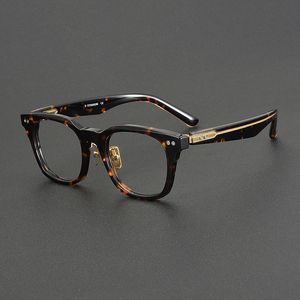
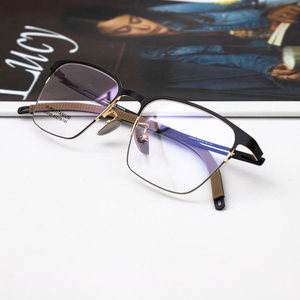

Building on decades of combined technical manufacturing expertise and distribution across primary international trade hubs, our operation solves critical supply friction for commercial eyewear chains.
All optical spectacle frames are micro-calibrated to ISO 12870 standard dimensions. Front grooves, rim closures, and eye sizes undergo 100% mechanical vernier inspection, ensuring seamless automatic glazing with single-vision, digital progressive, and premium blue-cut lab lenses without rim splitting.
Our raw material baseline guarantees stability. We utilize medical-grade pure Japanese titanium, memory beta-titanium wire, high-density cellulose acetate cured for 90 days to prevent warping, and resilient Swiss EMS TR90 granules for maximum structural elasticity and skin-safe hypoallergenicity.
Bridging Chinese volume manufacturing velocity with tailored multi-brand assortment capabilities (such as the market-proven Eagle & Kyte, Reyan, and Tryst series), we support custom OEM runs alongside mixed-SKU low-MOQ batch procurement to accelerate retail floor inventory turns.
For executive procurement officers, private-label directors, and commercial optometrists, navigating China's eyewear manufacturing landscape requires an analytical understanding of structural metallurgy, polymer curing, and surface chemistry. The modern consumer market demands featherlight ergonomics paired with extreme fatigue life.
The distinction between retail-grade spectacle frames and commoditized promotional pieces lies in structural stress engineering. Pure Titanium (Alpha-Ti) offers tensile strengths upwards of 950 MPa while reducing total frame front weight below 7.5 grams. During procurement evaluation, barrel hinge solder joints must undergo multi-axis tension testing up to 25 kg/cm². Acetate lines demand secondary tumbling cycles exceeding 72 hours in organic birchwood and pumice granules to yield an enduring high-luster, micro-scratch-resistant finish.
With optical retail chains switching to industrial high-speed CNC edging systems (such as Essilor, Nidek, and MEI), frame bevel depth must maintain exact 55° to 60° profiles with zero axial deviation. Any thermal shrinkage in cellulose propionate or improper bridge casting in monel wire results in lens pop-outs or stress birefringency in high-index polycarbonate and 1.74 lenses. Verified factory runs include standardized 3D trace files (.OMEGA or .VCA format) direct from the mold design phase.
Standard electroplating often fails sweat acidity tests (ISO 12870 nickel release guidelines) within 90 days of consumer use. Top-tier Chinese original equipment manufacturers utilize Physical Vapor Deposition (PVD) ion plating for titanium and stainless components. PVD coatings achieve surface hardnesses exceeding 2000 HV, resisting saline sweat corrosion, ultrasonic cleaning fatigue, and UV yellowing over multi-year lifecycles.
Where international eyewear engineering is heading: Sustainability matrices, smart frame integration, and high-efficiency direct-to-lab digital prototyping.
Global regulatory pressure (including EU CSRD mandates) is accelerating the shift toward bio-based plasticizers and triacetate cellulose (TAC). Procurement teams are prioritizing closed-loop factories that salvage up to 60% of acetate milling scrap while substituting petroleum phthalates with eco-friendly organic esters without sacrificing thermal flexibility.
The boundary between traditional frames and connected tech is evaporating. Tier-one facilities now co-develop hybrid TR90-nylon temple assemblies with water-resistant internal micro-cavities. This precision injection molding accommodates micro-speakers, directional microphones, and miniaturized battery cells with zero compromise to cosmetic elegance.
Additive 3D titanium and PA12 polymer printing has transitioned from prototyping into serialized production. For bespoke high-index corrective frames, SLS allows zero-waste custom sizing, hollow-core structure manufacturing impossible with standard CNC, and on-demand replenishment without tooling amortization overheads.
Key regulatory, logistical, and technical questions evaluated by our international trade advisory team.