
2026 Collection
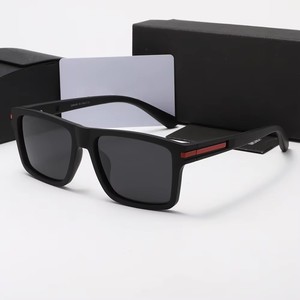
2026 Men's Luxury Designer Fashion Sunglasses Wholesale Made in China with Custom Logo
Custom Acetate
UV400 Category 3
OEM Logo
Precision Ophthalmic Engineering, High-Yield Bulk Manufacturing, and Global Direct Export Solutions for Brand Owners, Optical Chains, and Healthcare Importers.
Source high-volume, lab-tested spectacle frames and structural optical frameworks directly from audited assembly lines. Engineered for effortless glazing, automated finishing, and verified CE/FDA regulatory compliance.

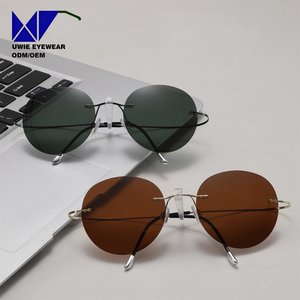
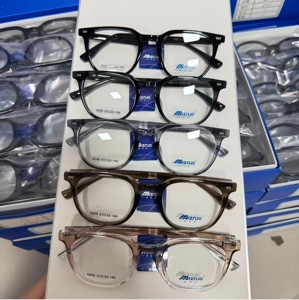
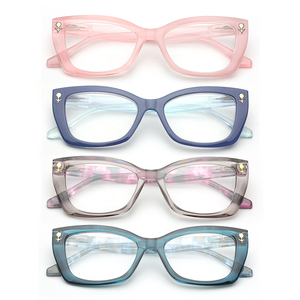
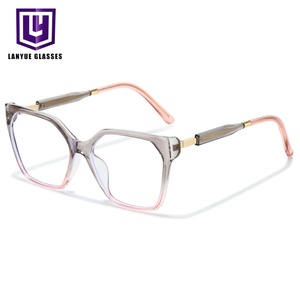
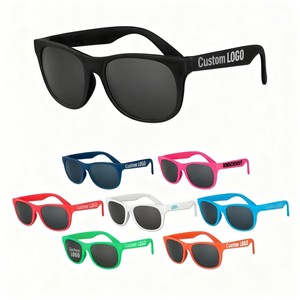
Combining the agile assortment capabilities of premier optical trading networks with cutting-edge cleanroom manufacturing. We bridge the gap between initial CAD concept prototyping and multinational containerized delivery.
Every frame lot undergoes mechanical barrel cycle testing (20,000 hinge opening-closing cycles), salt-spray nickel-leach resistance (EN ISO 12870), and three-dimensional bridge load deflection testing to safeguard ophthalmic lab glazing yields.
Drawing on established brand portfolios like Eagle & Kyte (contemporary metal and urban acetate), Reyan (clinical daily wear TR90), and Tryst (high-fashion editorial geometry), we facilitate mixed-SKU procurement with low consolidation overhead.
From custom 5-axis CNC acetate carving and precision wire core laser-engraving to custom private-label pad printing, pantoscopic angle calibration, and packaging box fabrication, we provide a complete private-label launchpad within 25 days.
We eliminate redundant handling tiers. Sourcing our bulk acetate sheets from verified aging vaults and our Japanese pure beta-titanium wire directly from metallurgical suppliers, our central manufacturing facility guarantees uninterrupted material consistency. Whether executing standard replenishment runs of 500 units or enterprise rollouts exceeding 100,000 frames per model, our automated production monitoring provides real-time ERP visibility, lot traceability, and localized customs clearance support for the EU, North America, LATAM, and APAC destinations.
As retail margins contract and consumer demand shifts toward instant optical customization, professional frame buyers must transition from transactional purchasing to structural supply chain integration.
Optical retailers are phasing out single-SKU orders of 5,000+ identical units. Market leaders now demand modular assortments—ordering 300 to 500 units per colorway across a broader geometric spectrum to align with algorithmic micro-trends and shorten inventory turn cycles.
Inventory OptimizationWith high-speed automated edging machinery (e.g., MEI, Essilor, Nidek) dominating central optical labs, frame tolerances must remain within ±0.15mm. Discrepancies in the bevel profile or eye-wire curve result in edge cracking, axis misalignment, and mounting bottlenecks.
Zero Lab RejectionCompliance with EU Medical Device Regulation (MDR 2017/745 Class I), FDA 21 CFR 801.410 impact resistance (drop-ball verification), and strict REACH SVHC chemical screening for skin-contact nickel release is no longer optional—it is a condition for customs clearance.
Medical Device AuditedBuyers are systematically replacing fossil-fuel-derived propionates with plant-based bio-acetates derived from sustainably farmed wood pulp and bio-plasticizers. Closed-loop recycling, where machining swarf is re-pelletized for injected components, drives downstream procurement.
Low-Carbon FootprintGlobal optical retail chains no longer settle for single-market fit architecture. Procurement catalogs now demand adaptable bridge designs: deeper Asian-fit splay angles, interchangeable titanium nose pads, and stepped-temple tapers to serve diverse demographic markets.
Global Fit ArchitectureSavvy retail chain directors and optometry networks are bypassing regional multi-tier brokers, routing procurement directly to established manufacturing centers that combine export logistics, duty-drawback documentation, and lab-ready assembly under a single contract.
Direct Exporter ParityUnderstanding the interplay between tensile elasticity, thermal stabilization, and biocompatibility enables enterprise buyers to make informed specification choices.
| Material Classification | Yield Strength & Elasticity | Cold-Glazing & Lab Workability | Corrosion & Biocompatibility | Target Retail Segment |
|---|---|---|---|---|
| Cured Cellulose Acetate (Plate) | Moderate; reinforced with custom stainless steel wire core | Requires 55°C–65°C bench heating; excellent lens retention | 100% Hypoallergenic; premium tactile warmth; hand-polished | Designer labels, boutique luxury, high-fashion statement |
| Japanese Beta-Titanium (β-Ti) | Exceptional super-elasticity; shape recovery up to 8% strain | Cold drill-mounting; screwless tension lock systems | Zero nickel release; impervious to perspiration and saltwater | Executive minimalist, featherweight luxury, medical grade |
| Swiss EMS TR90 Memory Polymer | High flexibility; flexural fatigue resistance > 500,000 cycles | Snap-in cold glazing; strict bevel depth adherence required | Ultra-lightweight (density 1.14 g/cm³); chemical solvent resistant | Everyday clinical lines, active sports optical, pediatric eyewear |
| Medical Grade Stainless Steel (316L) | High tensile rigidity; allows ultra-slim profile rims (<1.2mm) | Standard eyewire closure screws; micro-soldered hinges | Vacuum PVD ion plating; passes 96h artificial sweat testing | Classic business profiles, geometric wire frames, unisex optical |
A common failure point in budget acetate frames is temple warping and bridge flattening after delivery. Our factory enforces a mandatory 60-day low-temperature aging cycle for raw acetate slabs before CNC processing. This expels volatile plasticizers, locking the molecular structure in place and preventing post-assembly frame deformation when glazed with high-minus or high-plus prescription lenses.
Traditional water-electroplating poses environmental hazards and breaks down under continuous skin contact. Our metal and titanium frames utilize aerospace-grade PVD sputtering within high-vacuum chambers. The resulting titanium nitride (TiN) or carbon-nitride barrier provides surface hardness exceeding 2000 HV, safeguarding frames against oxidation, chipping, and corrosive cutaneous oils.
Clear, technical, and regulatory answers to guide your optical manufacturing contracts and import operations.